.webp)
/
CCJs & Defaults
CCJs & Defaults
How Long Does a CCJ Stay on Your Credit File?
5 min
Updated
August 2026
Written by the Bad Credit Queen team. Reviewed by Christian Queen, FCA-regulated mortgage broker.
This blog covers:
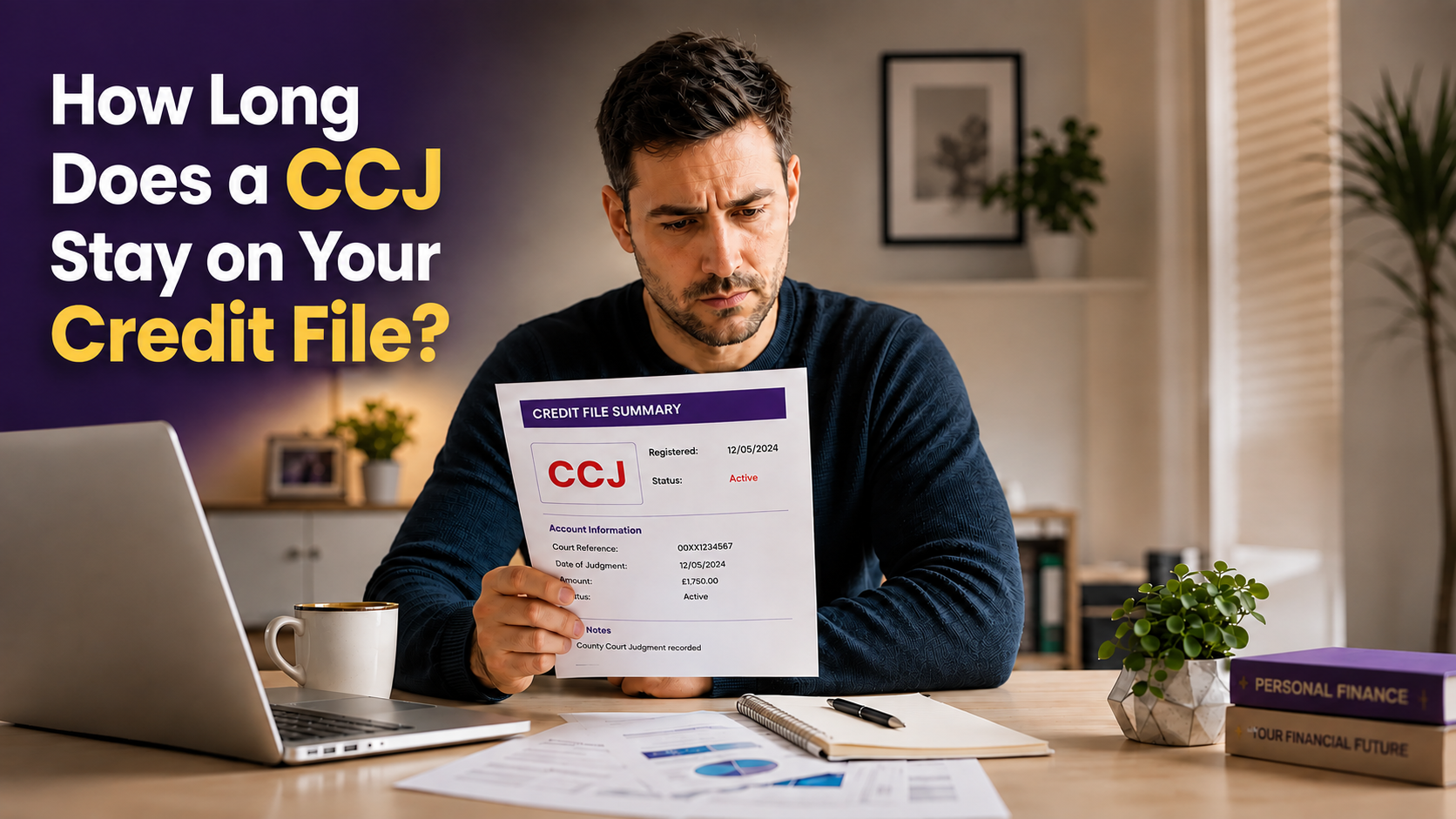
Six years. A CCJ stays on your credit file for six years from the date it was registered.
That is the short answer. But knowing just the number without knowing what changes during those six years is like checking the weather and only reading the temperature.
This blog covers what the 6-year rule really means, whether a CCJ can be removed early, what changes month by month, and what you can do about a CCJ on your credit file right now.
The 6-Year Rule Explained
A CCJ is recorded on your credit file from the date the court issues the judgment, not from the date the original debt started. This is where a lot of people get caught out.
The six-year countdown begins the day the judgment is registered. Older debt history does not count towards the six years. The clock starts fresh on the registration date.
The CCJ stays on your credit file for the full six years in almost every case, there's one narrow exception, covered below. Outside of that exception, paying it off does not remove it early. It changes its status to "satisfied", but the record itself remains.
The CCJ also appears on the Register of Judgments, Orders and Fines, a public register that lenders, landlords, and other organisations can search.
After six years, the record is automatically removed from both your credit file and the Register. You do not need to apply for it to happen.
Not sure where your own CCJ stands? Our Criteria Hub breaks down exactly how age, value, and satisfaction status affect your options. Check the Criteria Hub →
Can a CCJ Be Removed Early?
In most cases, no. But there are two exceptions worth knowing about.
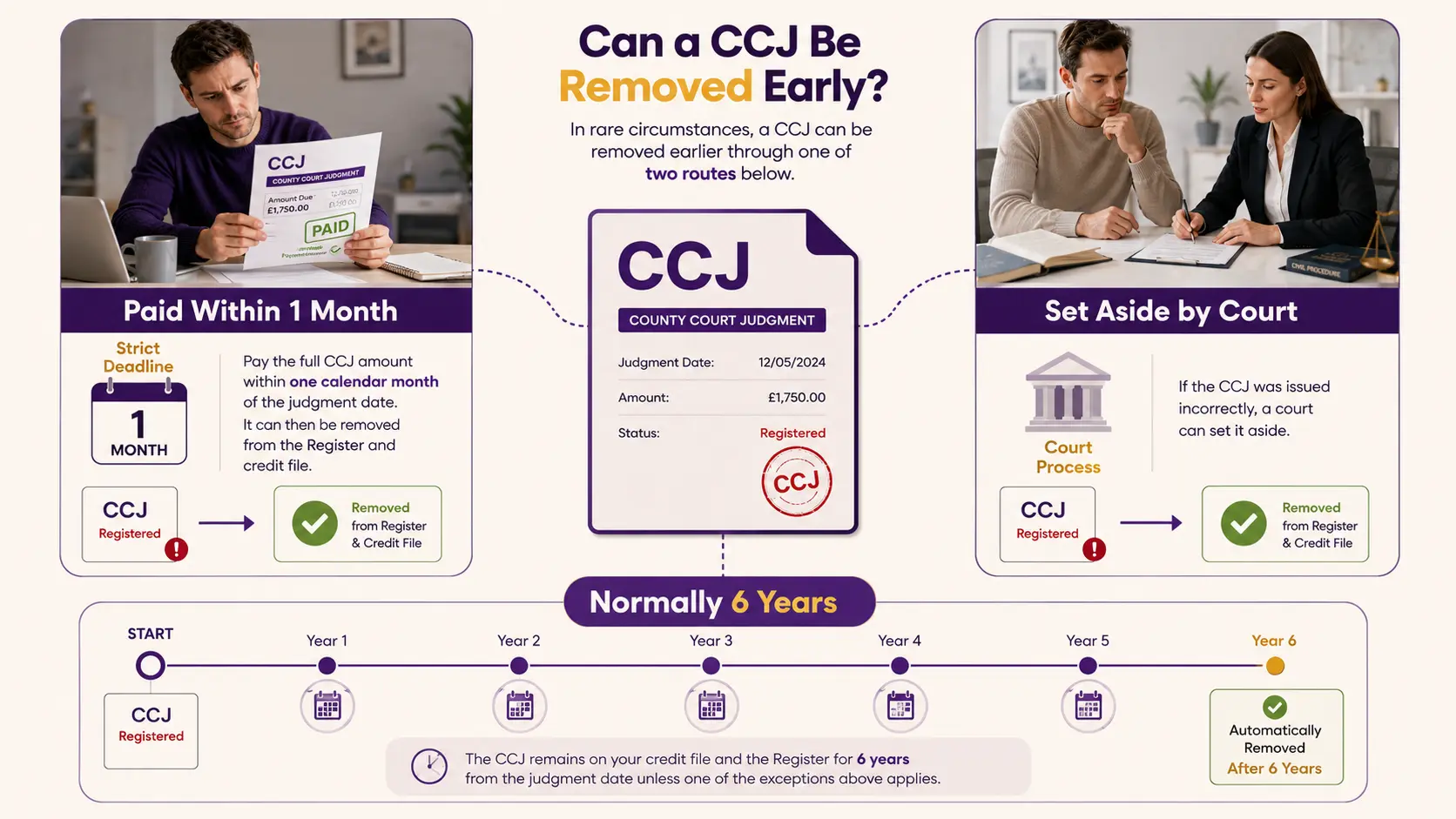
Exception 1: Paid within one calendar month. If you pay the full amount of the CCJ within one calendar month of the judgment date, you can apply to have it removed from the Register of Judgments and from your credit file. This is a strict deadline. After that month passes, the option closes permanently.
Exception 2: Set aside by the court. If the CCJ was issued incorrectly, you can apply to the court to have it set aside. Common grounds include:
- You were not properly notified of the claim
- The debt had already been paid
- The amount was wrong
- Or you had a valid defence that was not heard
If the court agrees, the CCJ is cancelled and removed from your credit file entirely, as if it never existed.
Setting aside a CCJ is a legal process handled through the court. It is not a loophole, and it only applies when the judgment was genuinely wrong. If you think your CCJ may have been issued incorrectly, contact the court or speak to a legal advisor.
What Happens When You Pay Off a CCJ?
Paying off a CCJ changes its status from unsatisfied to satisfied on your credit file. It does not remove it.
The CCJ still stays on your credit file for the full six years from the original registration date. Paying it off does not shorten that period by a single day.
But satisfied is viewed much more favourably than unsatisfied by mortgage lenders. A satisfied CCJ tells lenders you took responsibility for the debt and cleared it. That matters when they are deciding whether to work with you.
Once you have paid the CCJ in full, you can apply to the court for a certificate of satisfaction. This updates the entry on the Register of Judgments and on your credit file to show the CCJ has been paid.
If you can afford to pay off a CCJ before applying for a mortgage, it is usually worth doing so. It does not remove the record, but it opens up significantly more lender options.
The CCJ Timeline: What Changes and When?
The impact of a CCJ on your credit file changes significantly over time.
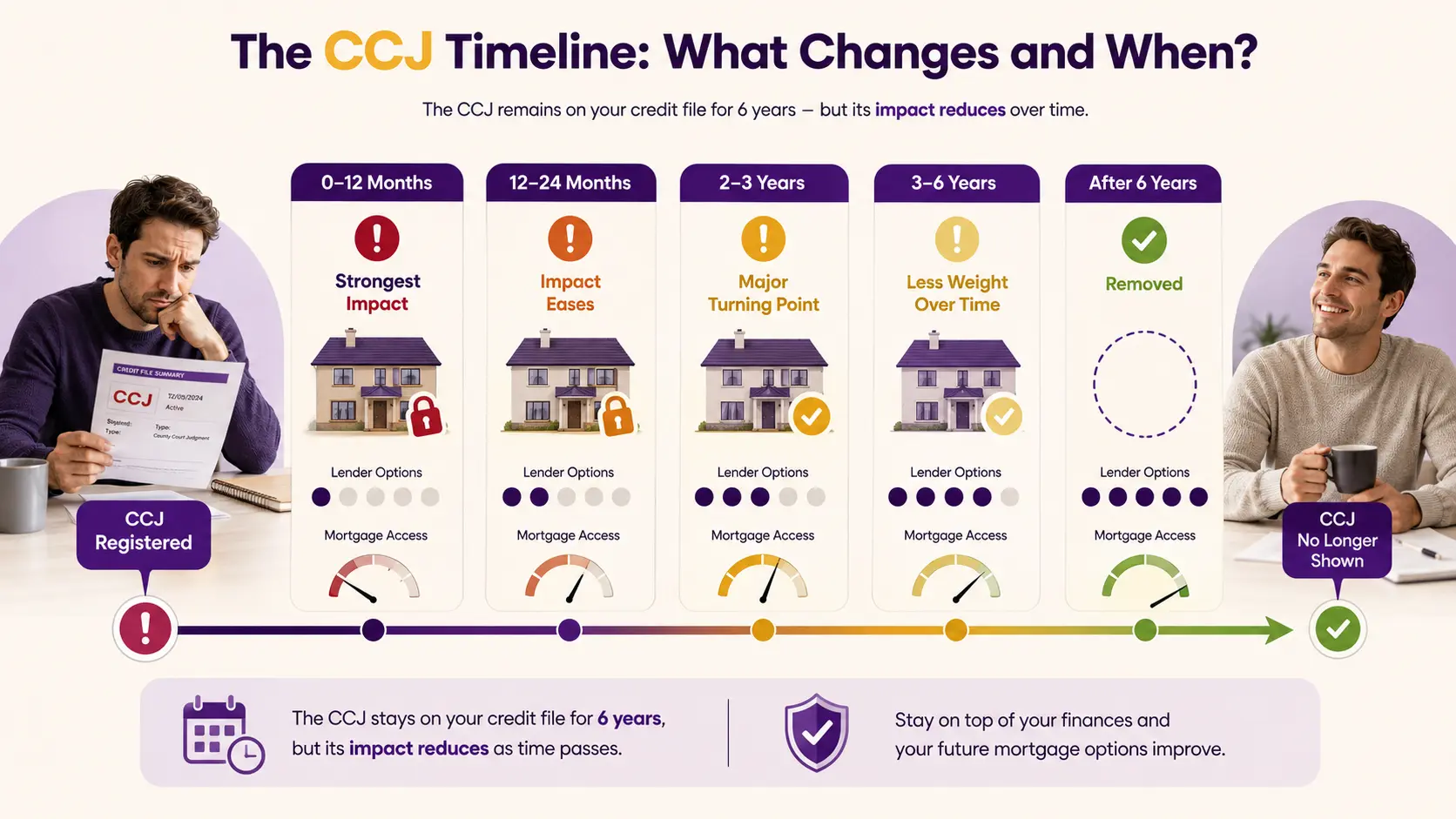
- 0 to 12 months after registration. The impact is at its strongest. Your credit score takes the biggest hit and your lender options are most limited. Applying for a mortgage in this window usually means a larger deposit and a higher rate.
- 12 to 24 months. The impact eases. Your credit score begins recovering, particularly if you are managing your other credit commitments well. A few more specialist mortgage lenders will consider you, especially if the CCJ has been satisfied.
- 2 to 3 years. A significant turning point. Many more specialist lenders open up their criteria at the two-year and three-year marks. Deposit requirements relax and interest rates improve.
- 3 to 6 years. The CCJ carries less weight with each passing month. Your options continue to widen and your rates continue to improve. By year five or six, many lenders treat it as near-irrelevant if the rest of your financial profile is stable.
- After 6 years. The CCJ drops off your credit file entirely. It no longer appears on any lender searches. For credit purposes, it is as if it never existed.
One important point. The impact fades gradually, not suddenly. You do not wake up on a specific anniversary with magically better options. Each month helps a little. The milestones above are just where the shift becomes most noticeable.
Can You Get a Mortgage While a CCJ Is Still on Your File?
Yes. You do not have to wait for the CCJ to drop off your credit file before applying for a mortgage.
Specialist mortgage lenders consider applications at every stage of the six-year period. The age of the CCJ, whether it is satisfied, the amount, and your deposit all factor into their decision. The older and smaller the CCJ, and the larger your deposit, the more options you have.
For the full breakdown of how CCJs affect mortgage applications, including deposit expectations, lender criteria, and how to apply without damaging your credit file, see our dedicated mortgage with a CCJ or default page.
Does a CCJ Affect Your Credit Score?
Yes. A CCJ typically causes a significant drop in your credit score when it is first registered.
The drop is sharpest immediately after registration. This is when the CCJ has the most impact on your score and your ability to access credit.
Over the months and years that follow, the impact on your score gradually reduces even while the CCJ is still on your file. As the record ages, your recent credit behaviour carries more weight.
The three UK credit reference agencies, Experian, Equifax, and TransUnion, may each reflect the impact differently. Check all three rather than just one.
Your score recovers faster if you are managing your other credit commitments well: paying bills on time, not maxing out credit cards, and not taking on excessive new debt.
How to Check if a CCJ Is on Your Credit File
You can check your credit file for free with each of the three main credit reference agencies in the UK.
- Experian: Free basic access via their own website
- Equifax: Free access via ClearScore
- TransUnion: Free access via Credit Karma
When you check, look for three things:
- The date the CCJ was registered (this is when the six-year clock starts)
- The amount
- Whether it shows as satisfied or unsatisfied
If anything is incorrect, dispute it directly with the credit reference agency. Errors on credit files are more common than most people realise, and a single mistake can affect which lenders will consider you.
Check all three agencies. Not all creditors and courts report to all three, so each may show slightly different information.
What Should You Do About a CCJ on Your Credit File?
If you have a CCJ on your file and you are thinking about a mortgage, three things are worth doing now:
- Check your credit file with all three agencies. Verify the CCJ details are correct: the date, the amount, and the status. If anything is wrong, dispute it with the agency. Getting an incorrect CCJ corrected can change your options significantly.
- If you can afford to pay off the CCJ, do so. Apply for a certificate of satisfaction from the court once you have paid. This changes the status on your file to satisfied, which opens up more lender options and often better interest rates.
- Speak to a specialist broker before applying to any lender directly. Every mortgage application leaves a hard search on your credit file. A broker does a soft search first to find which lenders will consider your case, without any impact on your credit file.
As an FCA-regulated bad credit mortgage broker, we specialise in helping people with CCJs find the right specialist lender without damaging their credit file further.
For broader guidance on all types of adverse credit and how they affect mortgage applications, read our adverse credit mortgage advice page.
Want to know where you stand? Share your details with us and we will give you an honest assessment of your options. No cost, no obligation, and no impact on your credit file. Talk to Us
.avif)
.avif)
.avif)
.avif)